| Country | Contributions | Between | Climbers | Crags | Summits | Climbs | Ascents | |
|---|---|---|---|---|---|---|---|---|
| 1 | United Kingdom | 11148 | 22nd May 2025 – 16th September 2026 | 114 | 13 | 0 | 586 | 1083 |
| 2 | France | 3430 | 22nd May 2025 – 29th August 2026 | 32 | 13 | 0 | 172 | 326 |
| 3 | USA | 1770 | 30th July 2025 – 14th August 2026 | 26 | 56 | 0 | 167 | 88 |
| 4 | Japan | 1478 | 19th July 2025 – 14th August 2026 | 14 | 25 | 0 | 107 | 73 |
| 5 | Spain | 319 | 31st July 2025 – 14th August 2026 | 3 | 9 | 0 | 35 | 13 |
| 6 | Switzerland | 229 | 31st July 2025 – 9th August 2026 | 2 | 5 | 0 | 21 | 15 |
| 7 | New Zealand | 216 | 19th August 2025 – 14th August 2026 | 1 | 1 | 0 | 17 | 13 |
| 8 | Canada | 170 | 10th September 2025 – 14th August 2026 | 1 | 9 | 0 | 25 | 3 |
| 9 | Italy | 166 | 12th August 2025 – 16th August 2026 | 2 | 7 | 0 | 19 | 7 |
| 10 | Germany | 151 | 8th November 2025 – 6th August 2026 | 4 | 6 | 0 | 10 | 5 |
| Date | Time | User | Type | Name | Attribute | ||
|---|---|---|---|---|---|---|---|
| 1581 | 28th June 2026 | 10:12:04 UTC | Mono | climber | John Allen | notes_pretty | |
|
Before
<p>John Allen was a prolific and gifted climber who established a host of hard, classic routes on his local gritstone crags in the Peak District.</p>
<p>Lines that had been eyed up by many fell to this prodigious young talent. He climbed <a href="/climb/877" rel="noopener noreferrer">Old Friends</a> (E4) when he was just 14 and continued adding quality new first ascents from there, such as <a href="/climb/878" rel="noopener noreferrer">Hairless Heart</a>, <a href="/climb/870" rel="noopener noreferrer">White Wand</a> (E5), <a href="/climb/879" rel="noopener noreferrer">Profit of Doom</a> (E4) and <a href="/climb/871" rel="noopener noreferrer">London Wall</a> (E5) which were climbed within a 2 week period at age 16.</p>
<p>From around 1977 to 1980, John lived in New Zealand where he established dozens of future classics [2]. He moved to Tahoe, USA, for 18 months (1981-82), climbing with <a href="/climber/722/john-bachar" rel="noopener noreferrer">John Bachar</a>, <a href="climber/728/john-long" rel="noopener noreferrer">John Long</a> and <a href="/climber/732/tony-yaniro" rel="noopener noreferrer">Tony Yaniro</a>. With Simon Horrox, he climbed <a href="/climb/990/the-nose" rel="noopener noreferrer">The Nose</a> in a day with no jumaring. [1] – the first time this had been achieved.</p>
<p>Shoulder surgery in early 1982 curtailed his output, but on return to the UK he began adding a plethora of high quality gritstone 'micro-routes' such as <a href="/climb/880" rel="noopener noreferrer">West Side Story</a> at <a href="/crag/1303" rel="noopener noreferrer">Burbage West</a>.</p>
<p>Although his enthusiasm for climbing waned in the '90s, he returned to it in the 2010s, developing mid-grade sport routes in the limestone quarries of the Peak District.</p>
<p>John sadly died in a climbing accident at <a href="/crag/33827/stoney-west" rel="noopener noreferrer">Stoney West</a> in 2020 [4]. He remains a revered and fondly remembered figure in British climbing.</p>
<h3>References</h3>
<p>[1] Obituary on <a href="https://www.ukclimbing.com/" rel="noopener noreferrer">UKClimbing.com</a> by
<a href="/climber/793/graham-hoey" rel="noopener noreferrer">Graham Hoey</a>, 27th May 2020  <a href="https://www.ukclimbing.com/articles/features/the_day_the_music_died_-_remembering_john_allen-12803" rel="noopener noreferrer">https://www.ukclimbing.com/articles/features/the_day_the_music_died_-_remembering_john_allen-12803</a></p>
<p>[2] List of John Allen routes in New Zealand <a href="https://www.ukclimbing.com/logbook/ticklists/nz_john_allen_routes-2588?sort=g" rel="noopener noreferrer">https://www.ukclimbing.com/logbook/ticklists/nz_john_allen_routes-2588?sort=g</a></p>
<p>[3] Interview with <a href="/climber/1096/geoff-birtles" rel="noopener noreferrer">Geoff Birtles</a> for <em>Crags</em> magazine in December 1976, shortly before John emmigrated to New Zealand <a href="https://www.climber.co.uk/people/the-john-allen-interview-crags-8-1977/" rel="noopener noreferrer">https://www.climber.co.uk/people/the-john-allen-interview-crags-8-1977/</a></p>
<p>[4] UKClimbing.com news report on the accident which killed John Allen (2020) <a href="https://www.ukclimbing.com/news/2020/05/john_allen_tragically_killed_at_stoney_west-72315" rel="noopener noreferrer">https://www.ukclimbing.com/news/2020/05/john_allen_tragically_killed_at_stoney_west-72315</a></p>
After
<p>John Allen was a prolific and gifted climber who established a host of hard, classic routes on his local gritstone crags in the Peak District.</p>
<p>Lines that had been eyed up by many fell to this prodigious young talent. He climbed <a href="/climb/877" rel="noopener noreferrer">Old Friends</a> (E4) when he was just 14 and continued adding quality new first ascents from there, such as <a href="/climb/878" rel="noopener noreferrer">Hairless Heart</a>, <a href="/climb/870" rel="noopener noreferrer">White Wand</a> (E5), <a href="/climb/879" rel="noopener noreferrer">Profit of Doom</a> (E4) and <a href="/climb/871" rel="noopener noreferrer">London Wall</a> (E5) which were climbed within a 2 week period at age 16.</p>
<p>From around 1977 to 1980, John lived in New Zealand where he established dozens of future classics [2]. He moved to Tahoe, USA, for 18 months (1981-82), climbing with <a href="/climber/722/john-bachar" rel="noopener noreferrer">John Bachar</a>, <a href="climber/728/john-long" rel="noopener noreferrer">John Long</a> and <a href="/climber/732/tony-yaniro" rel="noopener noreferrer">Tony Yaniro</a>. With Simon Horrox, he climbed <a href="/climb/990/the-nose" rel="noopener noreferrer">The Nose</a> in a day with no jumaring. [1] – the first time this had been achieved.</p>
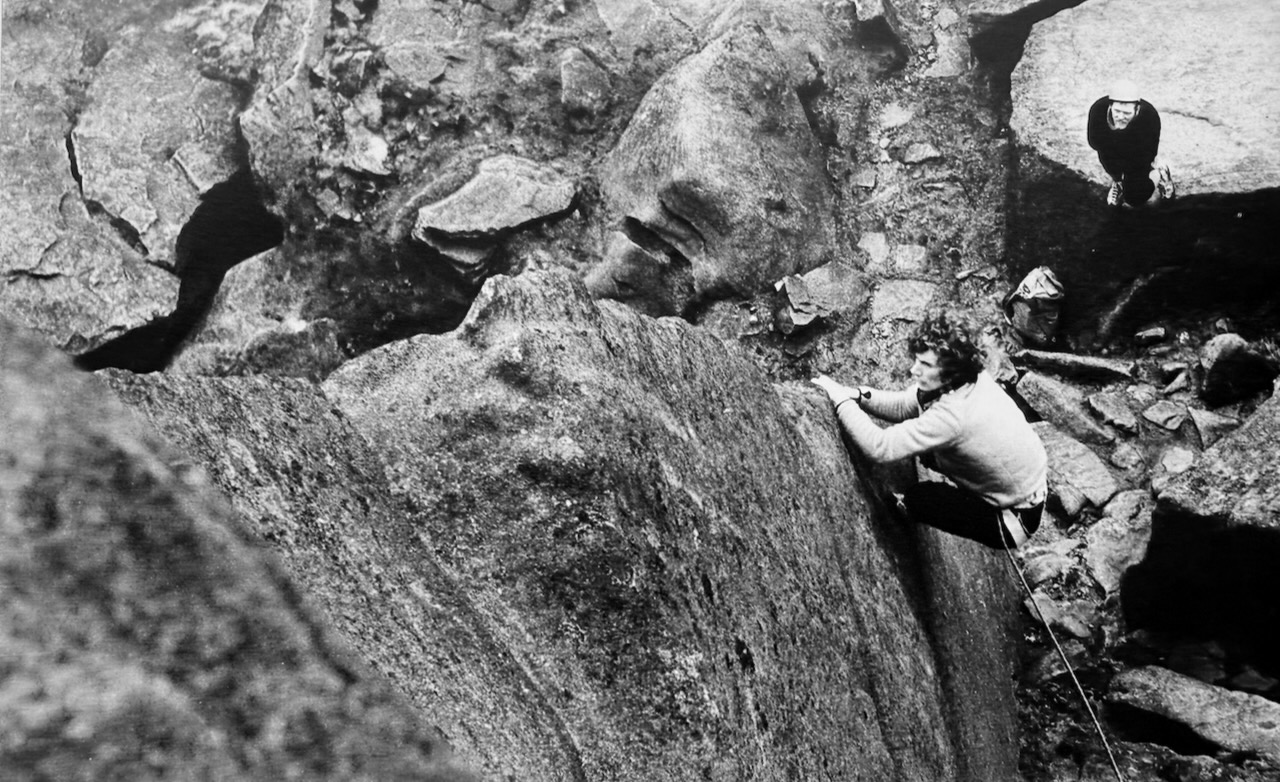
<p>Shoulder surgery in early 1982 curtailed his output, but on return to the UK in 1983 he began adding a plethora of high quality gritstone 'micro-routes' such as <a href="/climb/880" rel="noopener noreferrer">West Side Story</a> at <a href="/crag/1303" rel="noopener noreferrer">Burbage West</a>. He was clearly going in this period, as one onlooker recounts:</p>
<blockquote>
<p>I'd not been climbing that long and was up at Stanage and watched someone effortlessly float up <a href="/climb/6225/crescent-arête" rel="noopener noreferrer">Crescent Arête</a>, <a href="/climb/2032/not-to-be-taken-away" rel="noopener noreferrer">NTBTA</a>, <a href="/climb/3126/archangel" rel="noopener noreferrer">Archangel</a>, <a href="/climb/3127/don" rel="noopener noreferrer">Doug</a> [sic], <a href="/climb/870/white-wand" rel="noopener noreferrer">White Wand</a> (which I think he might have downclimbed) and <a href="/climb/881/ulysses'-bow" rel="noopener noreferrer">Ulysses</a> plus several other routes in the vicinity in about twenty minutes or less. It was John Allen not long after coming back from Australia or Yosemite. Incredible. [5]</p>
</blockquote>
<p>Although his enthusiasm for climbing waned in the '90s, he returned to it in the 2010s, developing mid-grade sport routes in the limestone quarries of the Peak District.</p>
<p>John sadly died in a climbing accident at <a href="/crag/33827/stoney-west" rel="noopener noreferrer">Stoney West</a> in 2020 [4]. He remains a revered and fondly remembered figure in British climbing.</p>
<h3>References</h3>
<p>[1] Obituary on <a href="https://www.ukclimbing.com/" rel="noopener noreferrer">UKClimbing.com</a> by
<a href="/climber/793/graham-hoey" rel="noopener noreferrer">Graham Hoey</a>, 27th May 2020  <a href="https://www.ukclimbing.com/articles/features/the_day_the_music_died_-_remembering_john_allen-12803" rel="noopener noreferrer">https://www.ukclimbing.com/articles/features/the_day_the_music_died_-_remembering_john_allen-12803</a></p>
<p>[2] List of John Allen routes in New Zealand <a href="https://www.ukclimbing.com/logbook/ticklists/nz_john_allen_routes-2588?sort=g" rel="noopener noreferrer">https://www.ukclimbing.com/logbook/ticklists/nz_john_allen_routes-2588?sort=g</a></p>
<p>[3] Interview with <a href="/climber/1096/geoff-birtles" rel="noopener noreferrer">Geoff Birtles</a> for <em>Crags</em> magazine in December 1976, shortly before John emmigrated to New Zealand <a href="https://www.climber.co.uk/people/the-john-allen-interview-crags-8-1977/" rel="noopener noreferrer">https://www.climber.co.uk/people/the-john-allen-interview-crags-8-1977/</a></p>
<p>[4] UKClimbing.com news report on the accident which killed John Allen (2020) <a href="https://www.ukclimbing.com/news/2020/05/john_allen_tragically_killed_at_stoney_west-72315" rel="noopener noreferrer">https://www.ukclimbing.com/news/2020/05/john_allen_tragically_killed_at_stoney_west-72315</a></p>
<p>[5] <a href="https://ukbouldering.com/threads/the-most-impressive-piece-of-climbing-you%E2%80%99ve-witnessed.31061/post-626708" rel="noopener noreferrer">https://ukbouldering.com/threads/the-most-impressive-piece-of-climbing-you%E2%80%99ve-witnessed.31061/post-626708</a></p>
|
|||||||
| 1582 | 28th June 2026 | 10:12:04 UTC | Mono | climber | John Allen | notes | |
|
Before
John Allen was a prolific and gifted climber who established a host of hard, classic routes on his local gritstone crags in the Peak District.

Lines that had been eyed up by many fell to this prodigious young talent. He climbed [Old Friends](/climb/877) (E4) when he was just 14 and continued adding quality new first ascents from there, such as [Hairless Heart](/climb/878), [White Wand](/climb/870) (E5), [Profit of Doom](/climb/879) (E4) and [London Wall](/climb/871) (E5) which were climbed within a 2 week period at age 16.

From around 1977 to 1980, John lived in New Zealand where he established dozens of future classics [2]. He moved to Tahoe, USA, for 18 months (1981-82), climbing with [John Bachar](/climber/722/john-bachar), [John Long](climber/728/john-long) and [Tony Yaniro](/climber/732/tony-yaniro). With Simon Horrox, he climbed [The Nose](/climb/990/the-nose) in a day with no jumaring. [1] – the first time this had been achieved.

Shoulder surgery in early 1982 curtailed his output, but on return to the UK he began adding a plethora of high quality gritstone 'micro-routes' such as [West Side Story](/climb/880) at [Burbage West](/crag/1303).

Although his enthusiasm for climbing waned in the '90s, he returned to it in the 2010s, developing mid-grade sport routes in the limestone quarries of the Peak District.

John sadly died in a climbing accident at [Stoney West](/crag/33827/stoney-west) in 2020 [4]. He remains a revered and fondly remembered figure in British climbing.

### References

[1] Obituary on [UKClimbing.com](https://www.ukclimbing.com/) by
[Graham Hoey](/climber/793/graham-hoey), 27th May 2020  [https://www.ukclimbing.com/articles/features/the_day_the_music_died_-_remembering_john_allen-12803](https://www.ukclimbing.com/articles/features/the_day_the_music_died_-_remembering_john_allen-12803)

[2] List of John Allen routes in New Zealand [https://www.ukclimbing.com/logbook/ticklists/nz_john_allen_routes-2588?sort=g](https://www.ukclimbing.com/logbook/ticklists/nz_john_allen_routes-2588?sort=g)

[3] Interview with [Geoff Birtles](/climber/1096/geoff-birtles) for *Crags* magazine in December 1976, shortly before John emmigrated to New Zealand [https://www.climber.co.uk/people/the-john-allen-interview-crags-8-1977/](https://www.climber.co.uk/people/the-john-allen-interview-crags-8-1977/)

[4] UKClimbing.com news report on the accident which killed John Allen (2020) [https://www.ukclimbing.com/news/2020/05/john_allen_tragically_killed_at_stoney_west-72315](https://www.ukclimbing.com/news/2020/05/john_allen_tragically_killed_at_stoney_west-72315)
After
John Allen was a prolific and gifted climber who established a host of hard, classic routes on his local gritstone crags in the Peak District.

Lines that had been eyed up by many fell to this prodigious young talent. He climbed [Old Friends](/climb/877) (E4) when he was just 14 and continued adding quality new first ascents from there, such as [Hairless Heart](/climb/878), [White Wand](/climb/870) (E5), [Profit of Doom](/climb/879) (E4) and [London Wall](/climb/871) (E5) which were climbed within a 2 week period at age 16.

From around 1977 to 1980, John lived in New Zealand where he established dozens of future classics [2]. He moved to Tahoe, USA, for 18 months (1981-82), climbing with [John Bachar](/climber/722/john-bachar), [John Long](climber/728/john-long) and [Tony Yaniro](/climber/732/tony-yaniro). With Simon Horrox, he climbed [The Nose](/climb/990/the-nose) in a day with no jumaring. [1] – the first time this had been achieved.

Shoulder surgery in early 1982 curtailed his output, but on return to the UK in 1983 he began adding a plethora of high quality gritstone 'micro-routes' such as [West Side Story](/climb/880) at [Burbage West](/crag/1303). He was clearly going in this period, as one onlooker recounts:

>I'd not been climbing that long and was up at Stanage and watched someone effortlessly float up [Crescent Arête](/climb/6225/crescent-arête), [NTBTA](/climb/2032/not-to-be-taken-away), [Archangel](/climb/3126/archangel), [Doug](/climb/3127/don) [sic], [White Wand](/climb/870/white-wand) (which I think he might have downclimbed) and [Ulysses](/climb/881/ulysses'-bow) plus several other routes in the vicinity in about twenty minutes or less. It was John Allen not long after coming back from Australia or Yosemite. Incredible. [5]

Although his enthusiasm for climbing waned in the '90s, he returned to it in the 2010s, developing mid-grade sport routes in the limestone quarries of the Peak District.

John sadly died in a climbing accident at [Stoney West](/crag/33827/stoney-west) in 2020 [4]. He remains a revered and fondly remembered figure in British climbing.

### References

[1] Obituary on [UKClimbing.com](https://www.ukclimbing.com/) by
[Graham Hoey](/climber/793/graham-hoey), 27th May 2020  [https://www.ukclimbing.com/articles/features/the_day_the_music_died_-_remembering_john_allen-12803](https://www.ukclimbing.com/articles/features/the_day_the_music_died_-_remembering_john_allen-12803)

[2] List of John Allen routes in New Zealand [https://www.ukclimbing.com/logbook/ticklists/nz_john_allen_routes-2588?sort=g](https://www.ukclimbing.com/logbook/ticklists/nz_john_allen_routes-2588?sort=g)

[3] Interview with [Geoff Birtles](/climber/1096/geoff-birtles) for *Crags* magazine in December 1976, shortly before John emmigrated to New Zealand [https://www.climber.co.uk/people/the-john-allen-interview-crags-8-1977/](https://www.climber.co.uk/people/the-john-allen-interview-crags-8-1977/)

[4] UKClimbing.com news report on the accident which killed John Allen (2020) [https://www.ukclimbing.com/news/2020/05/john_allen_tragically_killed_at_stoney_west-72315](https://www.ukclimbing.com/news/2020/05/john_allen_tragically_killed_at_stoney_west-72315)

[5] [https://ukbouldering.com/threads/the-most-impressive-piece-of-climbing-you%E2%80%99ve-witnessed.31061/post-626708](https://ukbouldering.com/threads/the-most-impressive-piece-of-climbing-you%E2%80%99ve-witnessed.31061/post-626708)
Diff
--- before
|
|||||||
| 1583 | 28th June 2026 | 10:05:55 UTC | Mono | media | /file/bddb4ac2-d945-1959-598d-2490576ad135/IMG_6998.jpeg | missing_right_to_reproduce | |
|
Before
None
After
true
|
|||||||
| 1584 | 28th June 2026 | 10:05:55 UTC | Mono | media | /file/bddb4ac2-d945-1959-598d-2490576ad135/IMG_6998.jpeg | url | |
|
Before
None
After
/file/bddb4ac2-d945-1959-598d-2490576ad135/IMG_6998.jpeg
|
|||||||
| 1585 | 28th June 2026 | 10:05:55 UTC | Mono | media | /file/bddb4ac2-d945-1959-598d-2490576ad135/IMG_6998.jpeg | src | |
|
Before
None
After
Peak Rock / High Magazine Archives
|
|||||||
| 1586 | 28th June 2026 | 10:05:55 UTC | Mono | media | /file/bddb4ac2-d945-1959-598d-2490576ad135/IMG_6998.jpeg | attribution | |
|
Before
None
After
John Woodhouse
|
|||||||
| 1587 | 28th June 2026 | 10:05:55 UTC | Mono | media | /file/bddb4ac2-d945-1959-598d-2490576ad135/IMG_6998.jpeg | url_optimised | |
|
Before
None
After
/file/546602ed-815f-4233-ae6a-c786722fbc63/IMG_6998.jpeg.webp
|
|||||||
| 1588 | 28th June 2026 | 10:04:44 UTC | Mono | ascent | Ron Fawcett's ascent of Archangel | ascent_dt_end | |
|
Before
None
After
1980-01-01
|
|||||||
| 1589 | 28th June 2026 | 10:04:44 UTC | Mono | ascent | Ron Fawcett's ascent of Archangel | climber_id | |
|
Before
None
After
532
|
|||||||
| 1590 | 28th June 2026 | 10:04:44 UTC | Mono | ascent | Ron Fawcett's ascent of Archangel | ascent_dt_start | |
|
Before
None
After
1970-01-01
|
|||||||
| 1591 | 28th June 2026 | 10:04:44 UTC | Mono | ascent | Ron Fawcett's ascent of Archangel | climb_id | |
|
Before
None
After
3126
|
|||||||
| 1592 | 28th June 2026 | 10:04:44 UTC | Mono | ascent | Ron Fawcett's ascent of Archangel | ascent_type_id | |
|
Before
None
After
1
|
|||||||
| 1593 | 28th June 2026 | 10:04:44 UTC | Mono | ascent | Ron Fawcett's ascent of Archangel | ascent_style_id | |
|
Before
None
After
7
|
|||||||
| 1594 | 28th June 2026 | 10:04:08 UTC | Mono | ascent | Paul Ingham's ascent of Archangel | ascent_style_id | |
|
Before
1
After
7
|
|||||||
| 1595 | 28th June 2026 | 09:59:32 UTC | Mono | climb | Archangel | notes | |
|
Before
Archangel is the quintessential gritstone arête: bold, insecure and utterly compelling.

[Don Whillans](/climber/730/don-whillans) top-roped the line in 1954, pinching the arête face-on and gripping it between his knees, which had rubber inner-tubes attached them for grip.  In 1971, [Ed Drummond](/climber/1235/ed-drummond) made the first ascent. With the benefit of chalk and rudimentary climbing shoes – though still no sticky rubber – he laybacked it on the left side. In 1985 he climbed it on the right side, naming it [Don](/climb/3127/don) (E4).

[Niall Grimes](/climber/702/niall-grimes):

> Matthew, in chapter 14, tells the story of the disciples seeing Jesus walk on the lake:

> 28 *Peter called to Him 'Lord, if it is you, tell me to come to you over the water'. 'Come' said Jesus.*
> 29 *Peter stepped down from the boat and walked over the water towards Jesus.*
> 30 *But when he saw the strength of the gale he was seized with fear; and beginning to sink, he cried 'Save me, Lord.'*
> 31 *Jesus at once reached out and caught hold of him, and said, 'Why did you hesitate? How little faith you have!'*

> This bible story serves well as an illustration of what you need to climb Archangel. It will confound the Book of Numbers. A man may well boulder 6c and redpoint 7c, but without faith he is no more likely to succeed than the man who has bouldered 5c, for without faith, even a rich man is more likely to get into the Kingdom of God than to climb Archangel. And you must have faith, not in the hand of god, but in thyself. [1]

### References

[1] *On The Edge* Issue 67, page 43
After
Archangel is the quintessential gritstone arête: bold, insecure and utterly compelling.

[Don Whillans](/climber/730/don-whillans) top-roped the line in 1954, pinching the arête face-on and gripping it between his knees, which had rubber inner-tubes attached them for grip.  In 1971, [Ed Drummond](/climber/1235/ed-drummond) made the first ascent. With the benefit of chalk and rudimentary climbing shoes – though still no sticky rubber – he laybacked it on the left side. In 1985 he climbed it on the right side, naming it [Don](/climb/3127/don) (E4).

Peak Rock:
>Again and again, [Ed Drummond](/climber/1235/ed-drummond)  found relatively reasonable solutions simply by experimenting. Even in 1972, Archangel wasn't as hard as many other gritstone routes. It was the concept of a blank unprotected arête and the sustained, technical laybacking required to subjugate it which had stopped earlier efforts. [1]

[Niall Grimes](/climber/702/niall-grimes):

> Matthew, in chapter 14, tells the story of the disciples seeing Jesus walk on the lake:

> 28 *Peter called to Him 'Lord, if it is you, tell me to come to you over the water'. 'Come' said Jesus.*
> 29 *Peter stepped down from the boat and walked over the water towards Jesus.*
> 30 *But when he saw the strength of the gale he was seized with fear; and beginning to sink, he cried 'Save me, Lord.'*
> 31 *Jesus at once reached out and caught hold of him, and said, 'Why did you hesitate? How little faith you have!'*

> This bible story serves well as an illustration of what you need to climb Archangel. It will confound the Book of Numbers. A man may well boulder 6c and redpoint 7c, but without faith he is no more likely to succeed than the man who has bouldered 5c, for without faith, even a rich man is more likely to get into the Kingdom of God than to climb Archangel. And you must have faith, not in the hand of god, but in thyself. [2]

[Adam Long](/climber/1491/adam-long):
>No holds on Archangel? What are you talking about? It’s the biggest hold on the crag! [3]

### References

[1] Peak Rock, Vertebrate Publishing, 2013

[2] *On The Edge* Issue 67, page 43

[3] [https://ukbouldering.com/threads/any-shorties-done-stall.6000/#post-84556](https://ukbouldering.com/threads/any-shorties-done-stall.6000/#post-84556)
Diff
--- before
|
|||||||
| 1596 | 28th June 2026 | 09:59:32 UTC | Mono | climb | Archangel | notes_pretty | |
|
Before
<p>Archangel is the quintessential gritstone arête: bold, insecure and utterly compelling. </p>
<p><a href="/climber/730/don-whillans" rel="noopener noreferrer">Don Whillans</a> top-roped the line in 1954, pinching the arête face-on and gripping it between his knees, which had rubber inner-tubes attached them for grip.  In 1971, <a href="/climber/1235/ed-drummond" rel="noopener noreferrer">Ed Drummond</a> made the first ascent. With the benefit of chalk and rudimentary climbing shoes – though still no sticky rubber – he laybacked it on the left side. In 1985 he climbed it on the right side, naming it <a href="/climb/3127/don" rel="noopener noreferrer">Don</a> (E4). </p>
<p><a href="/climber/702/niall-grimes" rel="noopener noreferrer">Niall Grimes</a>:</p>
<blockquote>
<p>Matthew, in chapter 14, tells the story of the disciples seeing Jesus walk on the lake:</p>
<p>28 <em>Peter called to Him 'Lord, if it is you, tell me to come to you over the water'. 'Come' said Jesus.</em><br>
29 <em>Peter stepped down from the boat and walked over the water towards Jesus.</em><br>
30 <em>But when he saw the strength of the gale he was seized with fear; and beginning to sink, he cried 'Save me, Lord.'</em><br>
31 <em>Jesus at once reached out and caught hold of him, and said, 'Why did you hesitate? How little faith you have!'</em></p>
<p>This bible story serves well as an illustration of what you need to climb Archangel. It will confound the Book of Numbers. A man may well boulder 6c and redpoint 7c, but without faith he is no more likely to succeed than the man who has bouldered 5c, for without faith, even a rich man is more likely to get into the Kingdom of God than to climb Archangel. And you must have faith, not in the hand of god, but in thyself. [1]</p>
</blockquote>
<h3>References</h3>
<p>[1] <em>On The Edge</em> Issue 67, page 43</p>
After
<p>Archangel is the quintessential gritstone arête: bold, insecure and utterly compelling. </p>
<p><a href="/climber/730/don-whillans" rel="noopener noreferrer">Don Whillans</a> top-roped the line in 1954, pinching the arête face-on and gripping it between his knees, which had rubber inner-tubes attached them for grip.  In 1971, <a href="/climber/1235/ed-drummond" rel="noopener noreferrer">Ed Drummond</a> made the first ascent. With the benefit of chalk and rudimentary climbing shoes – though still no sticky rubber – he laybacked it on the left side. In 1985 he climbed it on the right side, naming it <a href="/climb/3127/don" rel="noopener noreferrer">Don</a> (E4). </p>
<p>Peak Rock:</p>
<blockquote>
<p>Again and again, <a href="/climber/1235/ed-drummond" rel="noopener noreferrer">Ed Drummond</a>  found relatively reasonable solutions simply by experimenting. Even in 1972, Archangel wasn't as hard as many other gritstone routes. It was the concept of a blank unprotected arête and the sustained, technical laybacking required to subjugate it which had stopped earlier efforts. [1]</p>
</blockquote>
<p><a href="/climber/702/niall-grimes" rel="noopener noreferrer">Niall Grimes</a>:</p>
<blockquote>
<p>Matthew, in chapter 14, tells the story of the disciples seeing Jesus walk on the lake:</p>
<p>28 <em>Peter called to Him 'Lord, if it is you, tell me to come to you over the water'. 'Come' said Jesus.</em><br>
29 <em>Peter stepped down from the boat and walked over the water towards Jesus.</em><br>
30 <em>But when he saw the strength of the gale he was seized with fear; and beginning to sink, he cried 'Save me, Lord.'</em><br>
31 <em>Jesus at once reached out and caught hold of him, and said, 'Why did you hesitate? How little faith you have!'</em></p>
<p>This bible story serves well as an illustration of what you need to climb Archangel. It will confound the Book of Numbers. A man may well boulder 6c and redpoint 7c, but without faith he is no more likely to succeed than the man who has bouldered 5c, for without faith, even a rich man is more likely to get into the Kingdom of God than to climb Archangel. And you must have faith, not in the hand of god, but in thyself. [2]</p>
</blockquote>
<p><a href="/climber/1491/adam-long" rel="noopener noreferrer">Adam Long</a>:</p>
<blockquote>
<p>No holds on Archangel? What are you talking about? It’s the biggest hold on the crag! [3]</p>
</blockquote>
<h3>References</h3>
<p>[1] Peak Rock, Vertebrate Publishing, 2013</p>
<p>[2] <em>On The Edge</em> Issue 67, page 43</p>
<p>[3] <a href="https://ukbouldering.com/threads/any-shorties-done-stall.6000/#post-84556" rel="noopener noreferrer">https://ukbouldering.com/threads/any-shorties-done-stall.6000/#post-84556</a></p>
|
|||||||
| 1597 | 28th June 2026 | 08:24:56 UTC | Mono | climb | The Great Crack | notes | |
|
Before
Strangely, the guidebook author changed the name to 'Right Eliminate' despite [Joe Brown](/climber/612/joe-brown) naming it The Great Crack and the former name stuck for a long time.

There has been some controversy about the use of chockstones on the route, with various chockstones making an appearance through the routes lifetime. [1]

### References

[1] Letter in *On The Edge* Issue 141, October 2004

> Dear OTE,

> I'm writing this letter to alert the off-line climbing community to a debate which has raged on-line on [UKClimbing](https://www.ukclimbing.com/) for the last 10 days, (nearly 900 postings on the subject to date). Passions have been inflamed, emails exchanged, friends divided, enemies created - all because I took a stone out of a crack.

> In preparation for a forthcoming trip to Yosemite, I led Right Eliminate, an off-width crack at [Curbar Edge](/crag/21/curbar-edge) , for the first time. A chock- stone at two-thirds height in the route doubled as an (almost!) unavoidable hold and a runner. It also hid the best (natural) hold on the route. Afterwards I reflected on how the chockstone detracted from, and compromised, one of the best offwitdth cracks in the country.

> On the UKClimbing forum, I suggested removing the chockstone. It was quickly clear that there was both support and opposition for such an action. Being unconvinced by the arguments against, I removed the chockstone on a trial basis. Re-leading the route a few days later confirmed its greatly improved quality and only slightly greater difficulty.

> Graded E3, Right Eliminate is one of the few pure offwidth cracks in the country and is visible from some distance. First led in 1951 by [Joe Brown](/climber/612/joe-brown), the route was only protectable with chockstones, whereas nowadays it can be well protected with a couple of large cams. The chockstone was presumably placed on abseil by Joe or one of his mates [ed. this is not the case.]. However, its additional use as a hold meant that Right Eliminate was effectively climbed with a point of aid. Nevertheless, it was an outstanding achievement for the time. Latterly Right Eliminate's status as an iconic route was ensured by its inclusion in Extreme Rock and with such guidebook descriptions as 'the energy expended on each ascent could light Sheffield for a week' and 'striking terror into the hearts of stick insects everywhere'.

> In the 1980s [Paul Mitchell](/climber/1118/paul-mitchell) removed some lower chockstones and re-led the route, managing to somehow contort his way past the key chockstone, without using it for aid. However, this intriguing piece of climbing history was not common knowledge or recorded in the 1985 or 1991 guidebook and the purist style of Paul's ascent has not been widely imitated, if at all.

> Reporting my trial removal of the chock- stone on UKClimbing has resulted in intense debate (both pro and anti). Sadly this debate has sometimes spilled over into personal abuse with the UKClimbing moderators having to step in to remove some particularly objection-able posts. The main schism appears to be ethics/aesthetics, versus history/tradition. I've climbed on grit for 20 years, including new routes, and am mindful of tradition and history. Yet, I am convinced that a strikingly pure, challenging and compelling crack of rare quality should not be cluttered and obstructed with a piece of rubble however historically interesting.

> Anyone who has done the route will have grappled with the chockstone as it swivelled on its axis when pulled on. Not only was this trashing the crack each time a climber hung and threaded it, but its potential to pop out or crumble as a hold or runner increased as well. Admittedly it may have popped tomorrow or in 50 years time but the ease with which I lifted it out suggested that if Right Eliminate had received the traffic of more popular routes in the vicinity the chockstone would have disappeared in a dangerous way years ago.

> Finally, I would once again emphasise that my removal of the chockstone was always on a trial basis. It can be returned to its wrongful(?) place if the majority opinion is that this is the right thing to do. Or there may be other solutions... I would encourage off-line readers to respond to OTE as the online community has had our fair say. I would encourage readers even more to go out and climb this now flawless line. I don't know how this story is going to end but it has certainly challenged a lot of people, including myself, to re-examine our priorities and opinions.

> [Simon Lee](/climber/1098/simon-lee), Sheffield

[Joe Brown](/climber/612/joe-brown):
> Someone told me there was rumour had it that we had dropped chockstones down the crack. Well you couldn't even get into a place where you could drop chockstones down because the crack doesn't go to the top of the crag, anyway that was total bollocks. And I'm pretty sure that the one chockstone that was, was less than halfway up, and this was already there anyway. We didn't put any others in. And now, when I talked to him I said when you do that, you're doing it with camming devices?' and he said 'yeah, I said "and do you push those up in front of you?' He said 'yeah, everyone does, I said, 'well you're not leading it then, 'I said you're on a top rope if you do that.'

‘Peak Rock’, p.83
After
Strangely, the guidebook author changed the name to 'Right Eliminate' despite [Joe Brown](/climber/612/joe-brown) naming it The Great Crack and the former name stuck for a long time.

There has been some controversy about the use of chockstones on the route, with various chockstones making an appearance through the route’s lifetime. [1]

### References

[1] Letter in *On The Edge* Issue 141, October 2004

> Dear OTE,

> I'm writing this letter to alert the off-line climbing community to a debate which has raged on-line on [UKClimbing](https://www.ukclimbing.com/) for the last 10 days, (nearly 900 postings on the subject to date). Passions have been inflamed, emails exchanged, friends divided, enemies created - all because I took a stone out of a crack.

> In preparation for a forthcoming trip to Yosemite, I led Right Eliminate, an off-width crack at [Curbar Edge](/crag/21/curbar-edge) , for the first time. A chock- stone at two-thirds height in the route doubled as an (almost!) unavoidable hold and a runner. It also hid the best (natural) hold on the route. Afterwards I reflected on how the chockstone detracted from, and compromised, one of the best offwitdth cracks in the country.

> On the UKClimbing forum, I suggested removing the chockstone. It was quickly clear that there was both support and opposition for such an action. Being unconvinced by the arguments against, I removed the chockstone on a trial basis. Re-leading the route a few days later confirmed its greatly improved quality and only slightly greater difficulty.

> Graded E3, Right Eliminate is one of the few pure offwidth cracks in the country and is visible from some distance. First led in 1951 by [Joe Brown](/climber/612/joe-brown), the route was only protectable with chockstones, whereas nowadays it can be well protected with a couple of large cams. The chockstone was presumably placed on abseil by Joe or one of his mates [ed. this is not the case.]. However, its additional use as a hold meant that Right Eliminate was effectively climbed with a point of aid. Nevertheless, it was an outstanding achievement for the time. Latterly Right Eliminate's status as an iconic route was ensured by its inclusion in Extreme Rock and with such guidebook descriptions as 'the energy expended on each ascent could light Sheffield for a week' and 'striking terror into the hearts of stick insects everywhere'.

> In the 1980s [Paul Mitchell](/climber/1118/paul-mitchell) removed some lower chockstones and re-led the route, managing to somehow contort his way past the key chockstone, without using it for aid. However, this intriguing piece of climbing history was not common knowledge or recorded in the 1985 or 1991 guidebook and the purist style of Paul's ascent has not been widely imitated, if at all.

> Reporting my trial removal of the chock- stone on UKClimbing has resulted in intense debate (both pro and anti). Sadly this debate has sometimes spilled over into personal abuse with the UKClimbing moderators having to step in to remove some particularly objection-able posts. The main schism appears to be ethics/aesthetics, versus history/tradition. I've climbed on grit for 20 years, including new routes, and am mindful of tradition and history. Yet, I am convinced that a strikingly pure, challenging and compelling crack of rare quality should not be cluttered and obstructed with a piece of rubble however historically interesting.

> Anyone who has done the route will have grappled with the chockstone as it swivelled on its axis when pulled on. Not only was this trashing the crack each time a climber hung and threaded it, but its potential to pop out or crumble as a hold or runner increased as well. Admittedly it may have popped tomorrow or in 50 years time but the ease with which I lifted it out suggested that if Right Eliminate had received the traffic of more popular routes in the vicinity the chockstone would have disappeared in a dangerous way years ago.

> Finally, I would once again emphasise that my removal of the chockstone was always on a trial basis. It can be returned to its wrongful(?) place if the majority opinion is that this is the right thing to do. Or there may be other solutions... I would encourage off-line readers to respond to OTE as the online community has had our fair say. I would encourage readers even more to go out and climb this now flawless line. I don't know how this story is going to end but it has certainly challenged a lot of people, including myself, to re-examine our priorities and opinions.

> [Simon Lee](/climber/1098/simon-lee), Sheffield

[Joe Brown](/climber/612/joe-brown):
> Someone told me there was rumour had it that we had dropped chockstones down the crack. Well you couldn't even get into a place where you could drop chockstones down because the crack doesn't go to the top of the crag, anyway that was total bollocks. And I'm pretty sure that the one chockstone that was, was less than halfway up, and this was already there anyway. We didn't put any others in. And now, when I talked to him I said when you do that, you're doing it with camming devices?' and he said 'yeah, I said "and do you push those up in front of you?' He said 'yeah, everyone does, I said, 'well you're not leading it then, 'I said you're on a top rope if you do that.'

‘Peak Rock’, p.83
Diff
--- before
|
|||||||
| 1598 | 28th June 2026 | 08:24:56 UTC | Mono | climb | The Great Crack | notes_pretty | |
|
Before
<p>Strangely, the guidebook author changed the name to 'Right Eliminate' despite <a href="/climber/612/joe-brown">Joe Brown</a> naming it The Great Crack and the former name stuck for a long time.</p>
<p>There has been some controversy about the use of chockstones on the route, with various chockstones making an appearance through the routes lifetime. [1]</p>
<h3>References</h3>
<p>[1] Letter in <em>On The Edge</em> Issue 141, October 2004</p>
<blockquote>
<p>Dear OTE, </p>
<p>I'm writing this letter to alert the off-line climbing community to a debate which has raged on-line on <a href="https://www.ukclimbing.com/">UKClimbing</a> for the last 10 days, (nearly 900 postings on the subject to date). Passions have been inflamed, emails exchanged, friends divided, enemies created - all because I took a stone out of a crack.</p>
<p>In preparation for a forthcoming trip to Yosemite, I led Right Eliminate, an off-width crack at <a href="/crag/21/curbar-edge">Curbar Edge</a> , for the first time. A chock- stone at two-thirds height in the route doubled as an (almost!) unavoidable hold and a runner. It also hid the best (natural) hold on the route. Afterwards I reflected on how the chockstone detracted from, and compromised, one of the best offwitdth cracks in the country.</p>
<p>On the UKClimbing forum, I suggested removing the chockstone. It was quickly clear that there was both support and opposition for such an action. Being unconvinced by the arguments against, I removed the chockstone on a trial basis. Re-leading the route a few days later confirmed its greatly improved quality and only slightly greater difficulty.</p>
<p>Graded E3, Right Eliminate is one of the few pure offwidth cracks in the country and is visible from some distance. First led in 1951 by <a href="/climber/612/joe-brown">Joe Brown</a>, the route was only protectable with chockstones, whereas nowadays it can be well protected with a couple of large cams. The chockstone was presumably placed on abseil by Joe or one of his mates [ed. this is not the case.]. However, its additional use as a hold meant that Right Eliminate was effectively climbed with a point of aid. Nevertheless, it was an outstanding achievement for the time. Latterly Right Eliminate's status as an iconic route was ensured by its inclusion in Extreme Rock and with such guidebook descriptions as 'the energy expended on each ascent could light Sheffield for a week' and 'striking terror into the hearts of stick insects everywhere'.</p>
<p>In the 1980s <a href="/climber/1118/paul-mitchell">Paul Mitchell</a> removed some lower chockstones and re-led the route, managing to somehow contort his way past the key chockstone, without using it for aid. However, this intriguing piece of climbing history was not common knowledge or recorded in the 1985 or 1991 guidebook and the purist style of Paul's ascent has not been widely imitated, if at all.</p>
<p>Reporting my trial removal of the chock- stone on UKClimbing has resulted in intense debate (both pro and anti). Sadly this debate has sometimes spilled over into personal abuse with the UKClimbing moderators having to step in to remove some particularly objection-able posts. The main schism appears to be ethics/aesthetics, versus history/tradition. I've climbed on grit for 20 years, including new routes, and am mindful of tradition and history. Yet, I am convinced that a strikingly pure, challenging and compelling crack of rare quality should not be cluttered and obstructed with a piece of rubble however historically interesting.</p>
<p>Anyone who has done the route will have grappled with the chockstone as it swivelled on its axis when pulled on. Not only was this trashing the crack each time a climber hung and threaded it, but its potential to pop out or crumble as a hold or runner increased as well. Admittedly it may have popped tomorrow or in 50 years time but the ease with which I lifted it out suggested that if Right Eliminate had received the traffic of more popular routes in the vicinity the chockstone would have disappeared in a dangerous way years ago.</p>
<p>Finally, I would once again emphasise that my removal of the chockstone was always on a trial basis. It can be returned to its wrongful(?) place if the majority opinion is that this is the right thing to do. Or there may be other solutions... I would encourage off-line readers to respond to OTE as the online community has had our fair say. I would encourage readers even more to go out and climb this now flawless line. I don't know how this story is going to end but it has certainly challenged a lot of people, including myself, to re-examine our priorities and opinions.</p>
<p><a href="/climber/1098/simon-lee">Simon Lee</a>, Sheffield </p>
</blockquote>
<p><a href="/climber/612/joe-brown">Joe Brown</a>:</p>
<blockquote>
<p>Someone told me there was rumour had it that we had dropped chockstones down the crack. Well you couldn't even get into a place where you could drop chockstones down because the crack doesn't go to the top of the crag, anyway that was total bollocks. And I'm pretty sure that the one chockstone that was, was less than halfway up, and this was already there anyway. We didn't put any others in. And now, when I talked to him I said when you do that, you're doing it with camming devices?' and he said 'yeah, I said "and do you push those up in front of you?' He said 'yeah, everyone does, I said, 'well you're not leading it then, 'I said you're on a top rope if you do that.'</p>
</blockquote>
<p>‘Peak Rock’, p.83</p>
After
<p>Strangely, the guidebook author changed the name to 'Right Eliminate' despite <a href="/climber/612/joe-brown" rel="noopener noreferrer">Joe Brown</a> naming it The Great Crack and the former name stuck for a long time.</p>
<p>There has been some controversy about the use of chockstones on the route, with various chockstones making an appearance through the route’s lifetime. [1]</p>
<h3>References</h3>
<p>[1] Letter in <em>On The Edge</em> Issue 141, October 2004</p>
<blockquote>
<p>Dear OTE, </p>
<p>I'm writing this letter to alert the off-line climbing community to a debate which has raged on-line on <a href="https://www.ukclimbing.com/" rel="noopener noreferrer">UKClimbing</a> for the last 10 days, (nearly 900 postings on the subject to date). Passions have been inflamed, emails exchanged, friends divided, enemies created - all because I took a stone out of a crack.</p>
<p>In preparation for a forthcoming trip to Yosemite, I led Right Eliminate, an off-width crack at <a href="/crag/21/curbar-edge" rel="noopener noreferrer">Curbar Edge</a> , for the first time. A chock- stone at two-thirds height in the route doubled as an (almost!) unavoidable hold and a runner. It also hid the best (natural) hold on the route. Afterwards I reflected on how the chockstone detracted from, and compromised, one of the best offwitdth cracks in the country.</p>
<p>On the UKClimbing forum, I suggested removing the chockstone. It was quickly clear that there was both support and opposition for such an action. Being unconvinced by the arguments against, I removed the chockstone on a trial basis. Re-leading the route a few days later confirmed its greatly improved quality and only slightly greater difficulty.</p>
<p>Graded E3, Right Eliminate is one of the few pure offwidth cracks in the country and is visible from some distance. First led in 1951 by <a href="/climber/612/joe-brown" rel="noopener noreferrer">Joe Brown</a>, the route was only protectable with chockstones, whereas nowadays it can be well protected with a couple of large cams. The chockstone was presumably placed on abseil by Joe or one of his mates [ed. this is not the case.]. However, its additional use as a hold meant that Right Eliminate was effectively climbed with a point of aid. Nevertheless, it was an outstanding achievement for the time. Latterly Right Eliminate's status as an iconic route was ensured by its inclusion in Extreme Rock and with such guidebook descriptions as 'the energy expended on each ascent could light Sheffield for a week' and 'striking terror into the hearts of stick insects everywhere'.</p>
<p>In the 1980s <a href="/climber/1118/paul-mitchell" rel="noopener noreferrer">Paul Mitchell</a> removed some lower chockstones and re-led the route, managing to somehow contort his way past the key chockstone, without using it for aid. However, this intriguing piece of climbing history was not common knowledge or recorded in the 1985 or 1991 guidebook and the purist style of Paul's ascent has not been widely imitated, if at all.</p>
<p>Reporting my trial removal of the chock- stone on UKClimbing has resulted in intense debate (both pro and anti). Sadly this debate has sometimes spilled over into personal abuse with the UKClimbing moderators having to step in to remove some particularly objection-able posts. The main schism appears to be ethics/aesthetics, versus history/tradition. I've climbed on grit for 20 years, including new routes, and am mindful of tradition and history. Yet, I am convinced that a strikingly pure, challenging and compelling crack of rare quality should not be cluttered and obstructed with a piece of rubble however historically interesting.</p>
<p>Anyone who has done the route will have grappled with the chockstone as it swivelled on its axis when pulled on. Not only was this trashing the crack each time a climber hung and threaded it, but its potential to pop out or crumble as a hold or runner increased as well. Admittedly it may have popped tomorrow or in 50 years time but the ease with which I lifted it out suggested that if Right Eliminate had received the traffic of more popular routes in the vicinity the chockstone would have disappeared in a dangerous way years ago.</p>
<p>Finally, I would once again emphasise that my removal of the chockstone was always on a trial basis. It can be returned to its wrongful(?) place if the majority opinion is that this is the right thing to do. Or there may be other solutions... I would encourage off-line readers to respond to OTE as the online community has had our fair say. I would encourage readers even more to go out and climb this now flawless line. I don't know how this story is going to end but it has certainly challenged a lot of people, including myself, to re-examine our priorities and opinions.</p>
<p><a href="/climber/1098/simon-lee" rel="noopener noreferrer">Simon Lee</a>, Sheffield </p>
</blockquote>
<p><a href="/climber/612/joe-brown" rel="noopener noreferrer">Joe Brown</a>:</p>
<blockquote>
<p>Someone told me there was rumour had it that we had dropped chockstones down the crack. Well you couldn't even get into a place where you could drop chockstones down because the crack doesn't go to the top of the crag, anyway that was total bollocks. And I'm pretty sure that the one chockstone that was, was less than halfway up, and this was already there anyway. We didn't put any others in. And now, when I talked to him I said when you do that, you're doing it with camming devices?' and he said 'yeah, I said "and do you push those up in front of you?' He said 'yeah, everyone does, I said, 'well you're not leading it then, 'I said you're on a top rope if you do that.'</p>
</blockquote>
<p>‘Peak Rock’, p.83</p>
|
|||||||
| 1599 | 28th June 2026 | 08:23:33 UTC | Mono | climb | Dinosaur | notes | |
|
Before
The name comes from the long neck and small brain you'll need to climb the route (as Brown said of Crew)!

[Ken Wilson](/climber/1012/ken-wilson), writing in Mountain Craft (summer 1967):

> On the 19th June, 1966, [Joe Brown](/climber/612/joe-brown) and [Pete Crew](/climber/1959/pete-crew) climbed together for the first time and probably the strongest team ever to set foot on rock in this country made a bid to crack this "last great problem." They started early but they encountered such difficulty that both climbers were driven back several times. Late afternoon they were established on a stance in the middle of the wall. The cliff at this point was appallingly loose and it seemed as if they were hanging from tottering blocks all the time. All the lose material they pulled off was dropping into the sea 20 feet out from the base of the climb. They eventually finished at 9.30 p.m. The technical difficulty was high and the danger from loose rock was so considerable Dinosaur, as they called the climb, must stand out as one of the most formidable expeditions in
Wales. [1]

### References

[1] Gogarth (1990), page 268 [/library/7294/gogarth](/library/7294/gogarth)
After
The name comes from the long neck and small brain you'll need to climb the route (as Brown said of Crew)!

[Ken Wilson](/climber/1012/ken-wilson), writing in Mountain Craft (summer 1967):

> On the 19th June, 1966, [Joe Brown](/climber/612/joe-brown) and [Pete Crew](/climber/1959/pete-crew) climbed together for the first time and probably the strongest team ever to set foot on rock in this country made a bid to crack this "last great problem." They started early but they encountered such difficulty that both climbers were driven back several times. Late afternoon they were established on a stance in the middle of the wall. The cliff at this point was appallingly loose and it seemed as if they were hanging from tottering blocks all the time. All the loose material they pulled off was dropping into the sea 20 feet out from the base of the climb. They eventually finished at 9.30 p.m. The technical difficulty was high and the danger from loose rock was so considerable Dinosaur, as they called the climb, must stand out as one of the most formidable expeditions in
Wales. [1]

### References

[1] Gogarth (1990), page 268 [/library/7294/gogarth](/library/7294/gogarth)
Diff
--- before
|
|||||||
| 1600 | 28th June 2026 | 08:23:33 UTC | Mono | climb | Dinosaur | notes_pretty | |
|
Before
<p>The name comes from the long neck and small brain you'll need to climb the route (as Brown said of Crew)!</p>
<p><a href="/climber/1012/ken-wilson">Ken Wilson</a>, writing in Mountain Craft (summer 1967):</p>
<blockquote>
<p>On the 19th June, 1966, <a href="/climber/612/joe-brown">Joe Brown</a> and <a href="/climber/1959/pete-crew">Pete Crew</a> climbed together for the first time and probably the strongest team ever to set foot on rock in this country made a bid to crack this "last great problem." They started early but they encountered such difficulty that both climbers were driven back several times. Late afternoon they were established on a stance in the middle of the wall. The cliff at this point was appallingly loose and it seemed as if they were hanging from tottering blocks all the time. All the lose material they pulled off was dropping into the sea 20 feet out from the base of the climb. They eventually finished at 9.30 p.m. The technical difficulty was high and the danger from loose rock was so considerable Dinosaur, as they called the climb, must stand out as one of the most formidable expeditions in
Wales. [1]</p>
</blockquote>
<h3>References</h3>
<p>[1] Gogarth (1990), page 268 <a href="/library/7294/gogarth">/library/7294/gogarth</a></p>
After
<p>The name comes from the long neck and small brain you'll need to climb the route (as Brown said of Crew)!</p>
<p><a href="/climber/1012/ken-wilson" rel="noopener noreferrer">Ken Wilson</a>, writing in Mountain Craft (summer 1967):</p>
<blockquote>
<p>On the 19th June, 1966, <a href="/climber/612/joe-brown" rel="noopener noreferrer">Joe Brown</a> and <a href="/climber/1959/pete-crew" rel="noopener noreferrer">Pete Crew</a> climbed together for the first time and probably the strongest team ever to set foot on rock in this country made a bid to crack this "last great problem." They started early but they encountered such difficulty that both climbers were driven back several times. Late afternoon they were established on a stance in the middle of the wall. The cliff at this point was appallingly loose and it seemed as if they were hanging from tottering blocks all the time. All the loose material they pulled off was dropping into the sea 20 feet out from the base of the climb. They eventually finished at 9.30 p.m. The technical difficulty was high and the danger from loose rock was so considerable Dinosaur, as they called the climb, must stand out as one of the most formidable expeditions in
Wales. [1]</p>
</blockquote>
<h3>References</h3>
<p>[1] Gogarth (1990), page 268 <a href="/library/7294/gogarth" rel="noopener noreferrer">/library/7294/gogarth</a></p>
|
|||||||